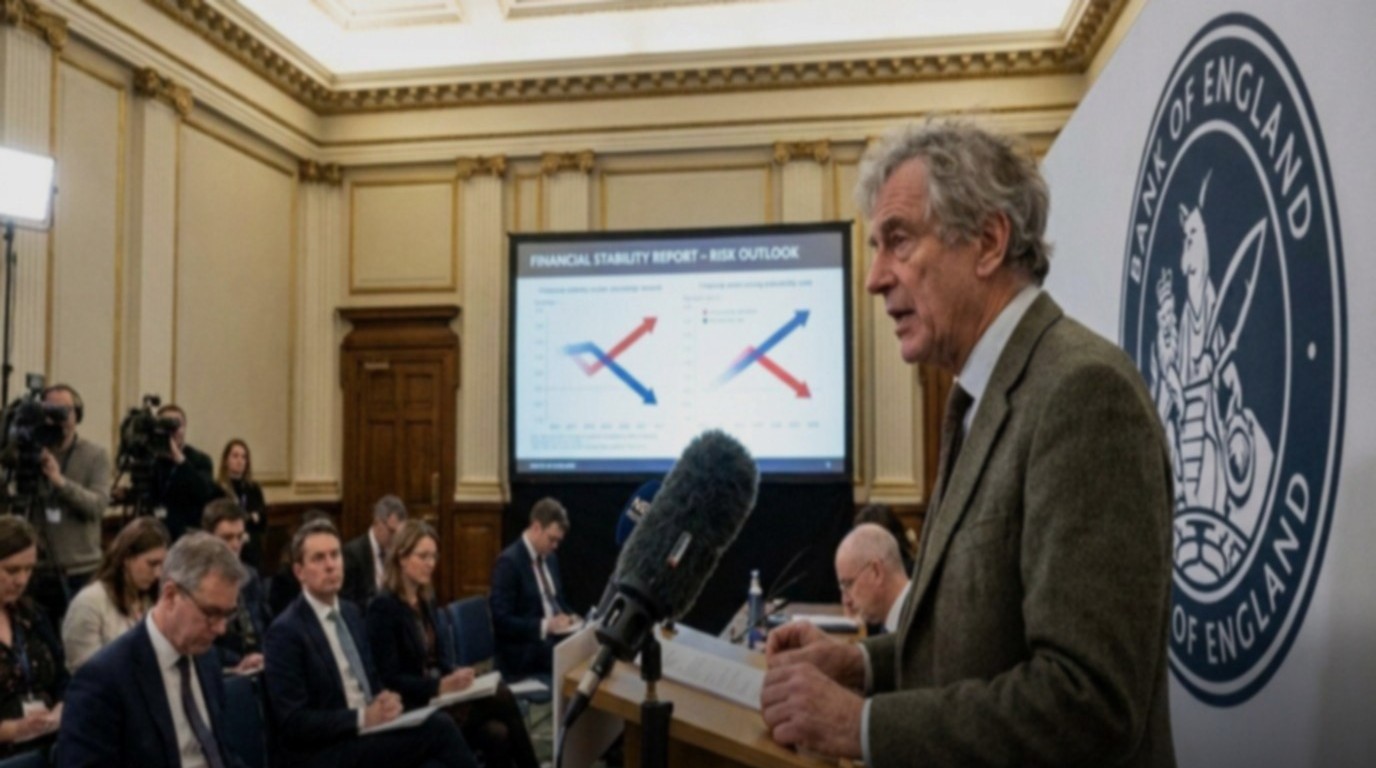
The Financial Conduct Authority's annual press conference, hosted in its East London headquarters for the first time, doubled as a relaunch. The CEO sketched a regulator that wants to be faster on listings, harsher on retail harms and more willing to admit when it has got things wrong.
Nikhil Rathi used his annual press conference to do something that, four years into his tenure, he has rarely been accused of: tell the City what the regulator is for. In a 35-minute address that ranged from initial public offerings to insurance pricing algorithms, the Chief Executive of the Financial Conduct Authority sketched a 2026 agenda that is at once more permissive on capital formation and more aggressive on consumer harm — a balance that, in his telling, has been absent for too long.
"Our job is to enable the markets people want to use and to protect the customers who need protection," Rathi said. "Those two missions are not in tension. They are the same mission, properly understood."
Listings: a new "PISCES" sandbox
Most striking was the announcement of a new Private Intermittent Securities and Capital Exchange System — PISCES, in the regulator's inevitable acronym — which will allow trading in shares of unlisted companies within a sandbox regime, starting in the second quarter of 2026. The scheme, jointly developed with HM Treasury, is designed to give growth-stage UK companies a more credible path to deep liquidity without forcing them into a full IPO at an inopportune moment.
Rathi was at pains to stress that PISCES is "not a deregulation" and that participating companies would be subject to full disclosure requirements. But the message to the City was clear: the FCA wants a piece of the trading volumes that have migrated to private markets in recent years.
Conduct: a more aggressive posture
On the conduct side, the FCA confirmed that it will publish a new Consumer Duty dashboard in the spring, setting out the regulator's own assessment of how firms are performing under the regime introduced in 2023. The dashboard, modelled on the Bank of England's Financial Stability Report, will rank sectors and name firms where there is "evidence of avoidable harm".
The FCA also announced a new thematic review into motor and home insurance pricing, a market in which the regulator has long suspected that loyal customers are being systematically overcharged. Rathi declined to be drawn on whether the review would lead to enforcement action but said the FCA "would not hesitate" to act where it found evidence of unfair pricing.
Reform of the Senior Managers Regime
In a more technical section of the briefing, Rathi confirmed that the FCA and the Prudential Regulation Authority are jointly consulting on a streamlining of the Senior Managers and Certification Regime, with the aim of clarifying accountability for cross-border groups and reducing the burden on smaller firms. The consultation will close in March 2026.
A regulator in 'listening mode'
Perhaps the most politically significant moment came in the Q&A, when Rathi was asked about the FCA's recent record on the winding-up of investment firms. He acknowledged that the regulator had been "too slow" to act in several cases and said he had ordered a "root-and-branch" review of the supervision of smaller advisory firms. The admission, made in front of an audience of City editors, is likely to be cited by the Treasury Select Committee when the regulator appears before it in the new year.
Whether the agenda amounts to a genuine rebalancing or a tactical relaunch will, of course, be tested by the cases that come through the regulator's doors in 2026. For now, the City is taking the FCA at its word. The London Stock Exchange closed the day up 0.7 per cent, and a clutch of fintechs that have been waiting for PISCES saw their private valuations rise by an average of 11 per cent on secondaries platforms.